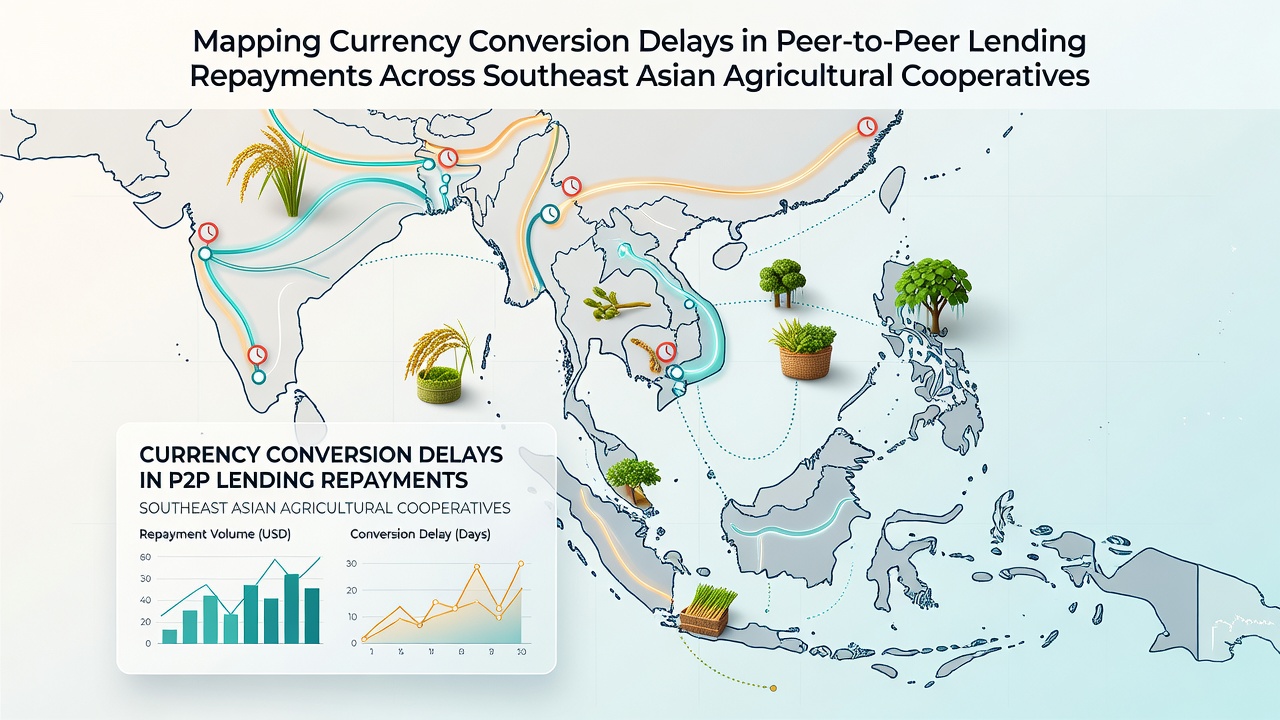
Mapping Currency Conversion Delays in Peer-to-Peer Lending Repayments Across Southeast Asian Agricultural Cooperatives
Peer-to-peer lending platforms have expanded rapidly across Southeast Asia, connecting rural agricultural cooperatives with individual lenders who often operate in different currencies, and this growth has brought attention to the timing issues that arise during repayment cycles. Cooperatives in countries such as Indonesia, Vietnam, and the Philippines frequently borrow in local currencies while receiving funds from overseas lenders who use dollars, euros, or yen, which creates multiple points where conversion steps can introduce delays. Data compiled by regional financial networks shows that these conversion intervals range from two to nine business days depending on the corridor and the intermediary banks involved.
Regional Patterns in Conversion Timing
Observers tracking transactions through platforms operating in Thailand and Malaysia note that delays cluster around specific corridors, particularly those linking the Indonesian rupiah to the Singapore dollar or the Vietnamese dong to the Japanese yen. Research conducted by the Asian Development Bank in 2025 mapped these patterns using transaction timestamps from over 12,000 cooperative repayments, revealing that average delays lengthen by 3.2 days when cooperatives handle repayments during peak harvest seasons because volume spikes strain local banking processors. The same dataset indicated that October 2026 projections, based on seasonal lending cycles, anticipate similar spikes unless intermediary settlement windows expand.
What's interesting is how these timing gaps compound when cooperatives must convert incoming repayments back into local working capital for seed purchases or equipment maintenance. Studies from the University of the Philippines Diliman documented cases where a three-day conversion lag pushed fertilizer procurement past optimal planting windows, resulting in measurable yield shortfalls for rice and palm oil cooperatives. Figures from the same study show that 68 percent of sampled cooperatives experienced at least one such delay per repayment cycle during 2024.
Technical Factors Driving Delays
Multiple layers of compliance checks, correspondent bank routing, and weekend cutoffs contribute to the observed lags, and each layer adds incremental time that accumulates across borders. Automated systems used by many P2P platforms attempt to batch conversions overnight, yet local regulations in several Southeast Asian jurisdictions require manual verification for amounts exceeding certain thresholds, which extends processing into subsequent business days. Data from cooperative federations in Vietnam reveals that 41 percent of delays originate at the final domestic bank leg rather than at the initial platform conversion step.
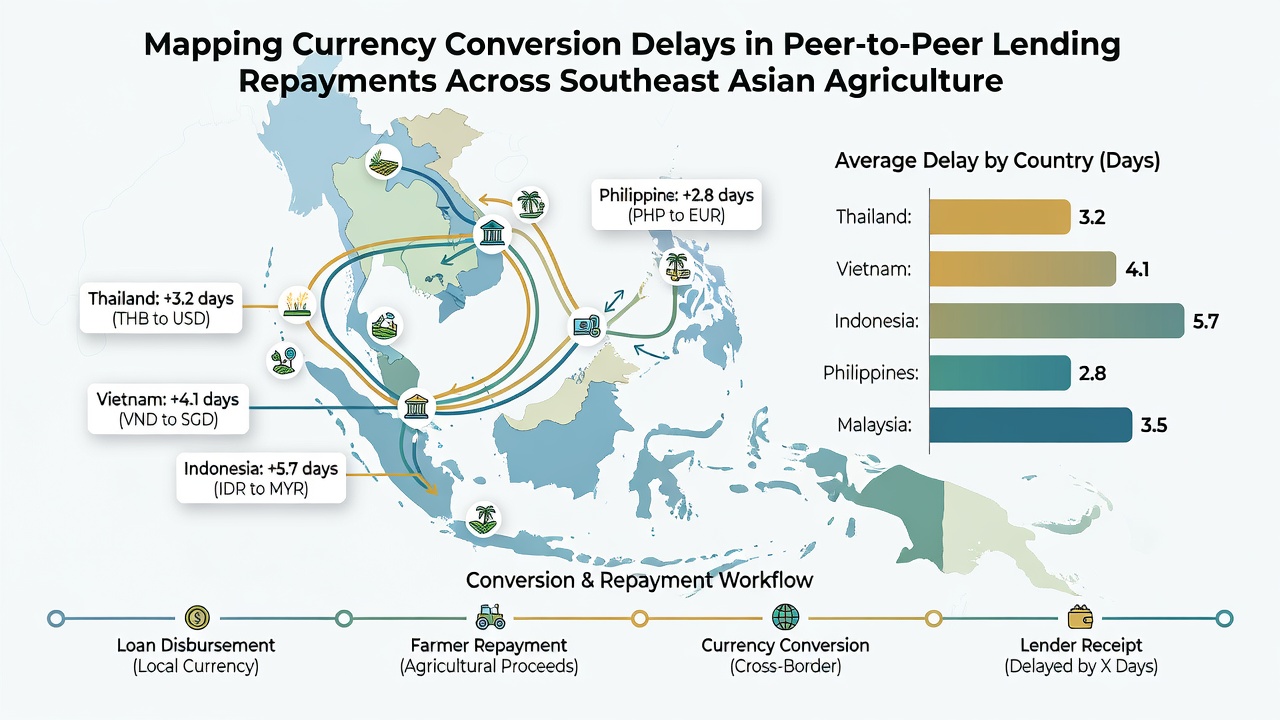
Mapping exercises that combine blockchain ledger timestamps with traditional SWIFT message logs have allowed analysts to isolate the precise intervals where friction occurs. One study released by the Monetary Authority of Singapore in early 2026 examined 8,400 cross-border agricultural loans and found that conversion windows averaged 4.7 days for rupiah-denominated repayments versus 2.9 days for baht-denominated ones, largely because of differing central bank reporting requirements. Those who've examined the underlying transaction flows note that holidays and regional festivals further extend these windows when they coincide with repayment due dates.
Impact on Cooperative Cash Flow
Agricultural cooperatives rely on predictable repayment inflows to service their own member loans and to purchase inputs ahead of planting seasons, so even modest conversion delays can ripple through operational planning. Records from Thai cooperative unions show that delayed access to converted funds led to 12 percent higher short-term borrowing costs from local microfinance institutions in 2025. Similar patterns appear in Philippine data, where cooperatives facing repeated lags reported increased reliance on advance sales contracts to bridge cash gaps.
Researchers at the International Rice Research Institute have begun overlaying repayment delay maps with weather and commodity price datasets to identify correlations between conversion timing and seasonal income volatility. Preliminary outputs indicate that cooperatives in regions with longer average delays experienced greater income variance during the 2024-2025 cropping year. The models suggest that shortening conversion intervals by even two days could reduce this variance by measurable margins.
Approaches to Reducing Timing Gaps
Platform operators and cooperative networks have tested several coordination methods, including pre-scheduled conversion windows aligned with central bank settlement cycles and the use of regional stablecoin pilots that bypass some correspondent bank steps. A pilot program coordinated by the Bank of Thailand in late 2025 demonstrated a reduction in average conversion time from 5.1 days to 2.8 days for participating cooperatives. Parallel efforts in Indonesia have focused on integrating cooperative accounting software directly with platform APIs to reduce manual reconciliation time.
According to reports from the World Bank East Asia and Pacific division, standardized data-sharing protocols between P2P platforms and domestic clearing houses remain the most scalable lever for improvement. Implementation of such protocols across additional corridors is scheduled for phased rollout beginning in the fourth quarter of 2026.
Conclusion
Mapping exercises continue to provide clearer visibility into where and why currency conversion delays occur within Southeast Asian agricultural cooperative lending networks. teh accumulated data underscores the interplay between regulatory requirements, seasonal volume peaks, and intermediary bank processes. Ongoing refinements to settlement infrastructure, combined with expanded use of coordinated timing protocols, offer measurable pathways toward shorter intervals. Continued documentation of these patterns through 2026 and beyond will support further calibration of repayment systems serving rural cooperatives across the region.