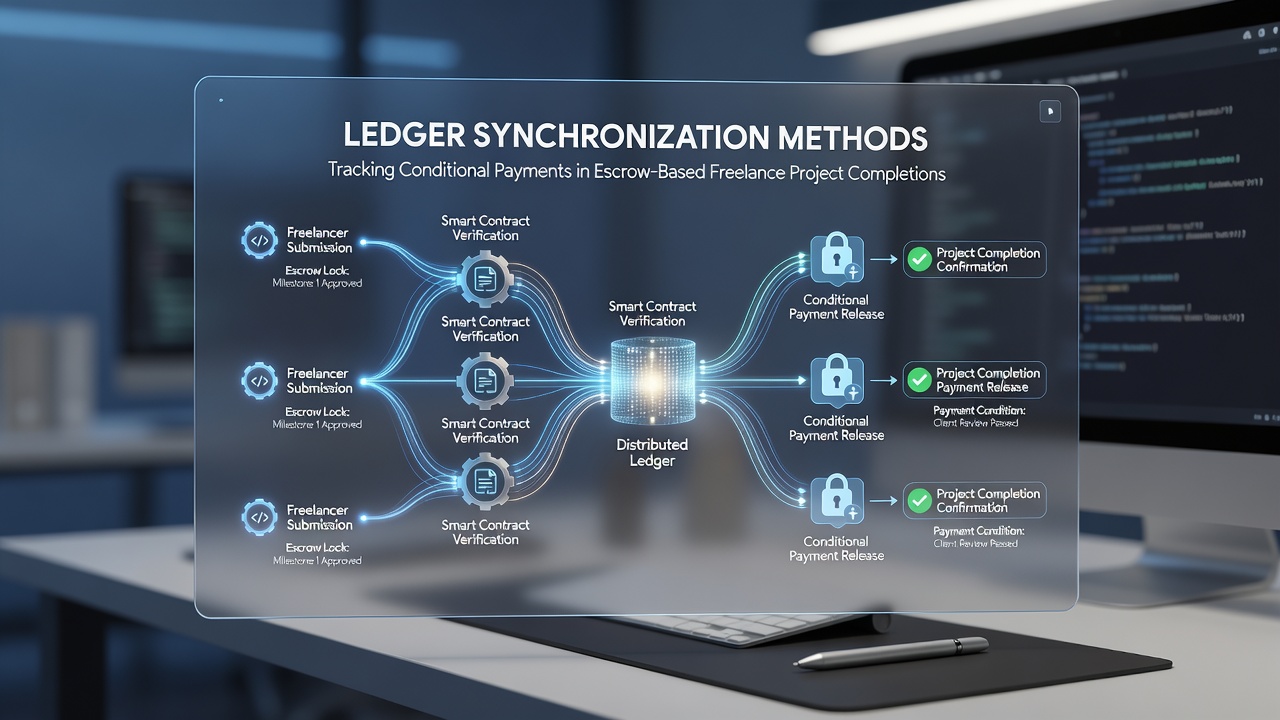
Ledger Synchronization Methods for Tracking Conditional Payments in Escrow-Based Freelance Project Completions
Escrow arrangements in freelance work rely on synchronized ledgers to manage conditional payments that release only after verified project milestones. Data from payment platforms indicate that these systems track fund movement through multiple verification stages, while researchers at institutions across regions document how synchronization prevents premature disbursements. In October 2026 observers noted increased adoption of automated reconciliation protocols amid rising cross-border freelance activity, with figures from the European Central Bank showing steady growth in escrow volume for digital services.
Core Mechanisms Behind Conditional Payment Tracking
Conditional payments in escrow setups depend on milestone confirmations that trigger ledger updates across connected accounts, and synchronization occurs through standardized data exchanges that align merchant records with escrow provider entries. Those who study payment flows report that real-time API connections enable immediate status propagation, whereas batch processing methods consolidate updates at set intervals to reduce network load. Studies from Australian universities highlight how timestamp matching between client approvals and fund releases maintains accuracy, especially when projects span multiple time zones.
One approach involves distributed ledger technologies that create immutable records of each condition check, allowing all parties to reference the same transaction history without central bottlenecks. Another method uses centralized databases that pull verification signals from project management tools and push confirmation flags back to escrow accounts, and this setup suits smaller operations where speed matters more than decentralization. Evidence suggests both paths achieve reliable tracking when paired with robust error-checking routines.
API-Driven Synchronization in Practice
Application programming interfaces form the backbone for many escrow platforms handling freelance completions, pulling milestone data from client dashboards and pushing release instructions to banking ledgers. Researchers note that these handshakes often incorporate checksum validations to confirm data integrity before any payment movement occurs. In regions following updated fintech guidelines, such as those outlined in Canadian regulatory updates, API calls must include specific authentication tokens that link project IDs directly to escrow balances.
Take the case where a freelance developer completes a design phase and uploads deliverables; the platform then queries the client system for approval, synchronizes the confirmed status across ledgers, and initiates fund transfer only after dual verification. This sequence reduces disputes because each ledger entry carries metadata from prior steps, creating an auditable chain that external auditors can review without accessing original project files.
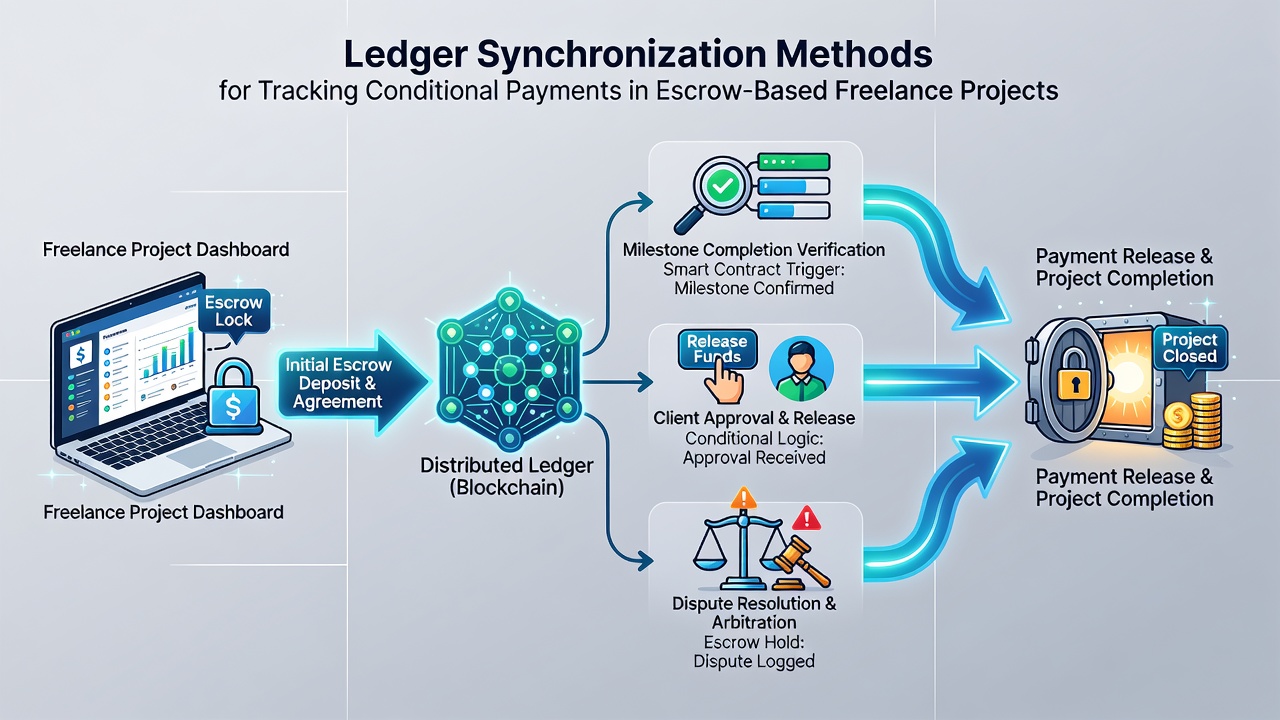
Distributed Ledger Approaches for Multi-Party Visibility
Distributed systems extend synchronization beyond traditional databases by replicating ledger states across nodes operated by different stakeholders, and this architecture supports conditional releases that depend on smart contract logic. According to analyses from the Bank for International Settlements, such methods scale effectively when freelance networks grow to include international participants who require simultaneous access to payment status. Observers note that consensus protocols within these ledgers validate milestone achievements before updating balances, thereby enforcing conditions without manual intervention.
Yet implementation requires careful mapping of project variables to contract parameters, since mismatched data formats can delay synchronization. Platforms that integrate with freelance marketplaces often embed these mappings during onboarding, which streamlines later updates when project scopes shift. Figures reveal that distributed approaches cut reconciliation time by aligning entries in near real time, though they demand higher initial setup costs compared with API-only solutions.
Integration Challenges and Resolution Patterns
Freelance projects frequently involve variable deliverables that complicate ledger alignment, and synchronization protocols address this by allowing partial releases tied to incremental verifications. Those managing such systems report that conflict resolution modules detect discrepancies between client records and escrow logs, then trigger manual review workflows only when automated checks fail. Research indicates that holiday calendar adjustments and currency conversion rules further refine these alignments, particularly for global teams operating under different compliance calendars.
Batch reconciliation serves as a backup when live connections drop, aggregating pending transactions and applying them once connectivity resumes. This layered strategy ensures continuity even during network disruptions common in remote work environments.
Conclusion
Ledger synchronization methods continue to evolve alongside freelance platforms, incorporating both centralized and distributed elements to track conditional payments with precision. Data shows that successful implementations combine API efficiency with distributed transparency, creating reliable pathways for escrow releases tied to verified completions. As adoption expands in October 2026 and beyond, these techniques support secure, traceable transactions across diverse project types while maintaining alignment between all involved ledgers.