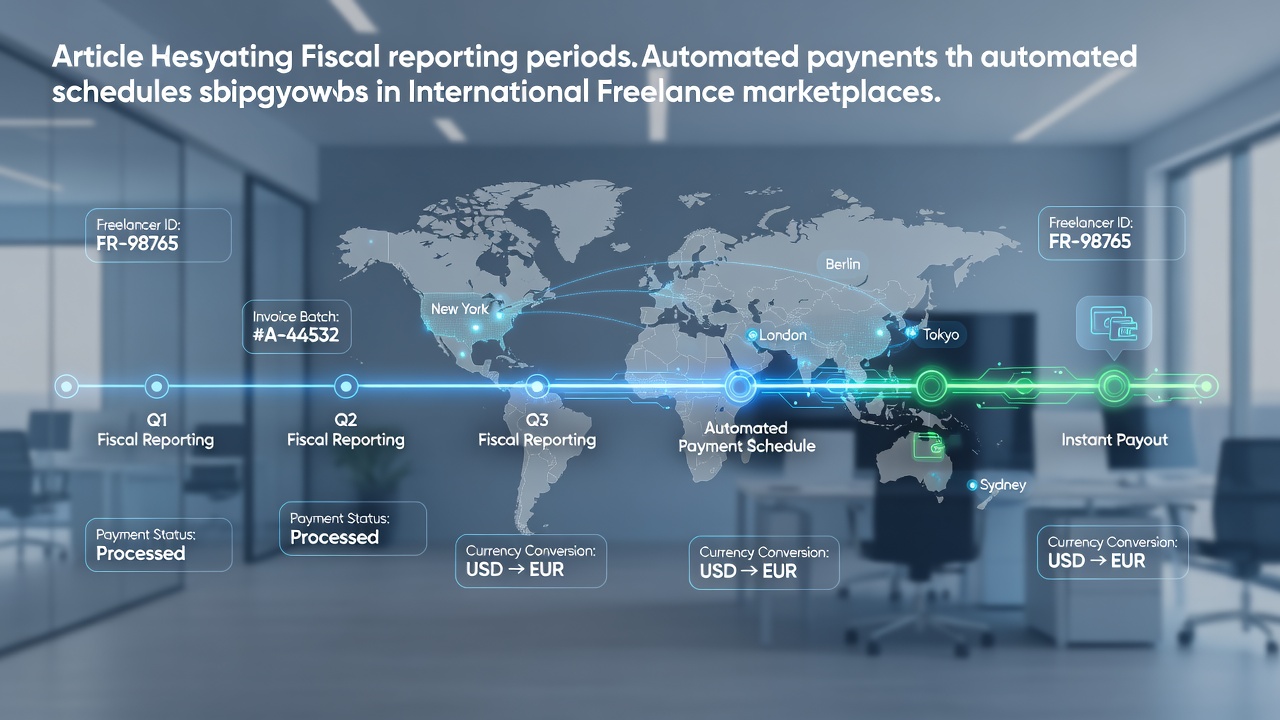
Aligning Fiscal Reporting Periods with Automated Payment Schedules in International Freelance Marketplaces
International freelance marketplaces process billions in cross-border payments each year, and platforms such as Upwork, Fiverr, and Freelancer.com use automated schedules that release funds on fixed intervals ranging from weekly to monthly. These automated cycles often operate independently of the fiscal reporting periods required by tax authorities in different jurisdictions, creating timing mismatches that affect how freelancers record income and how platforms generate 1099 forms or equivalent documentation.
Core Mechanics of Automated Payment Schedules
Marketplaces typically set disbursement triggers based on completed deliverables, client approvals, and holding periods that satisfy anti-fraud rules. Research from the OECD indicates that 68 percent of surveyed platforms default to 14-day or 30-day payout windows, while fiscal years in many countries run on calendar-year or April-to-March cycles. When a payment lands on the 28th of a month but a freelancer's reporting deadline falls on the 15th, the transaction may appear in the wrong quarter unless reconciliation tools adjust the booking date.
Fiscal Reporting Requirements Across Borders
Freelancers operating across multiple countries must satisfy rules from bodies such as the IRS in the United States, the Australian Taxation Office, and EU member state revenue services. Each authority defines its own year-end and quarterly reporting dates, and many require income to be recognized on an accrual basis even if cash has not yet cleared the bank. Data from the World Bank shows that 47 percent of digital workers in emerging markets receive payments from clients whose fiscal calendars differ from their own local requirements.
Technical Synchronization Methods
Platforms now embed API endpoints that allow freelancers to map their chosen fiscal periods directly into payout calendars. These integrations pull transaction timestamps, convert them to the user's reporting currency at the spot rate on the service date, and push summarized ledgers into accounting software. One study published by the University of Cambridge found that freelancers who activated such mappings reduced quarterly reconciliation time by an average of 41 percent.
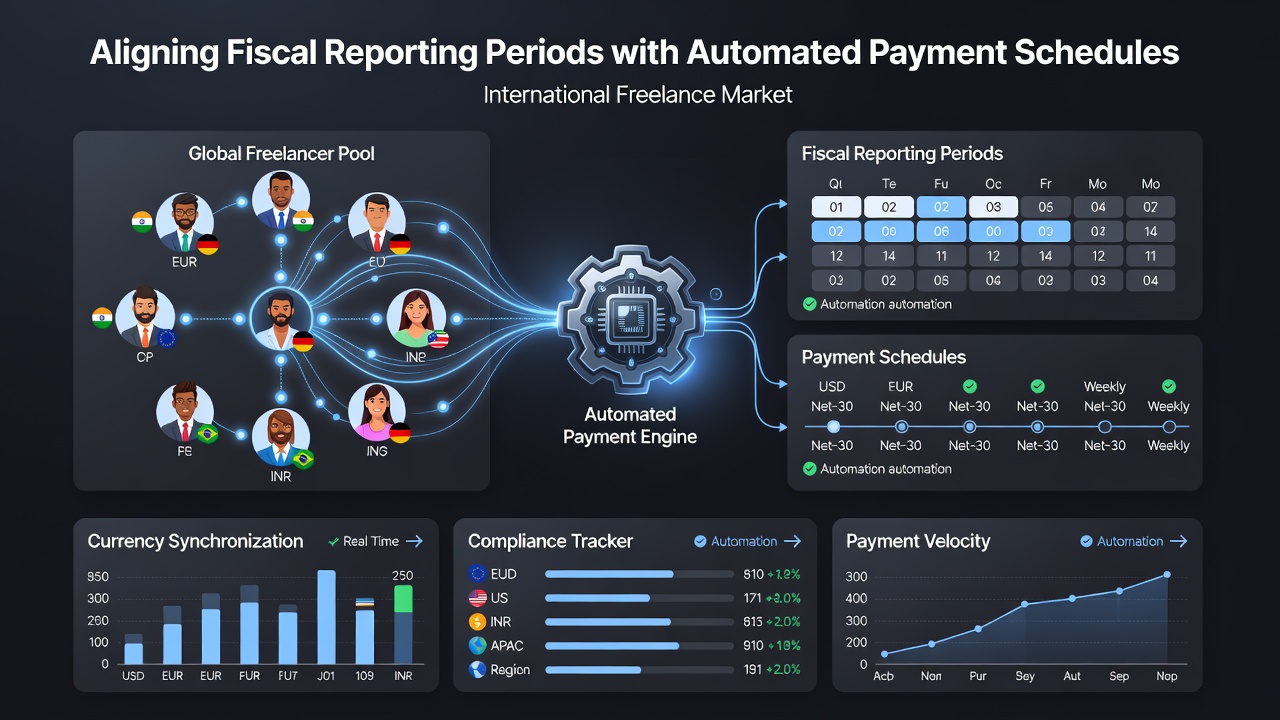
Time-zone offsets add another layer. A platform server in Singapore may record a completed milestone at 03:00 UTC while the freelancer's client in California still operates on the previous business day. Automated systems that apply UTC normalization and attach the correct fiscal period tag prevent these offsets from shifting income across reporting boundaries. As of November 2026 several major marketplaces are rolling out mandatory UTC-stamped transaction exports to support upcoming changes in cross-border VAT collection rules.
Currency Conversion and Recognition Timing
When payments cross currencies, the exchange rate applied on the payout date may differ from the rate required for tax reporting. Regulations in Canada and the United Kingdom specify that income should be converted at the rate prevailing on the date the receivable becomes due rather than the settlement date. Platforms that supply both rates in downloadable reports enable freelancers to meet these dual requirements without manual intervention. Figures released by the Bank for International Settlements reveal that currency mismatches account for 12 percent of amended tax filings among digital nomads.
Practical Examples from Marketplace Data
Take one developer based in India who completes projects for EU clients. The marketplace releases funds every Friday, yet the developer's Indian fiscal year ends 31 March and EU VAT returns fall due on the 20th of the following month. By configuring the platform's fiscal calendar tool to align disbursements with the 31 March cutoff, the developer receives a single consolidated report that matches both Indian income-tax filings and EU VAT ledgers. Observers note similar patterns among graphic designers in Brazil who align automated payouts with the Brazilian calendar year while satisfying U.S. client 1099 deadlines.
Compliance Tools and Platform Features
Leading marketplaces now offer toggle options that let users select their primary fiscal year start and end dates. Once selected, the system automatically groups transactions into the correct periods and generates downloadable files formatted for direct import into tax software. The U.S. Internal Revenue Service updated its electronic filing specifications in 2025 to accept these platform-generated summaries, reducing the number of individual transaction entries required from freelancers.
Conclusion
Aligning fiscal reporting periods with automated payment schedules requires coordinated use of timestamp normalization, dual exchange-rate reporting, and configurable calendar settings. Marketplaces that supply these features allow freelancers to meet obligations set by multiple tax authorities without additional manual adjustments. Continued expansion of API-driven reconciliation tools and the November 2026 updates to cross-border data standards are expected to further reduce timing discrepancies across international freelance ecosystems.